We are starting off Round 3 of TBA’s book review with Anthro-Vision by Gillian Tett. Tett is a journalist for the Financial Times with a PhD in anthropology from the University of Cambridge. She has previously written about the financial crash in Fool's Gold (2009) and examined communication within organisations by drawing on her knowledge of tribes and their rituals in the Effect: The Peril of Expertise and the Promise of Breaking Down Barriers (2015)
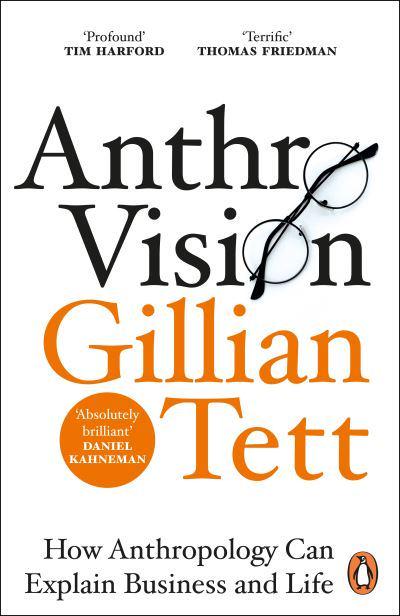
Published in 2021, Anthro-Vision examines consumer behaviour through an anthropological lens. Anthropology is based on observation by immersion in a specific culture and learning about personal experiences. By drawing parallels between stories from Tajik villages and Amazon warehouses, or Japanese classrooms and Wall Street trading floors, she explores consumer decision making, how businesses operate, and how we can use these insights to make better decisions ourselves.
Mia Wu, Consultant at TBA China, and Eleanor Heather, Associate Director at TBA UK, volunteered to read the book and share their reviews with the team.
***
At TBA we closely examine behaviour through the lens of Behavioural Science. How does Antro-Vision build on our understanding of human behaviour?
Through entertaining anecdotes and well-crafted stories, Tett seeks to emphasise the need for anthropological (qualitative) research and its open-ended exploratory approach, particularly in this current era of Big Data and siloed working.
As a result, the book doesn’t exactly build on our understanding of human behaviour but rather confirms what we already know: that context matters, that behaviours are fluid and easier to change when you work with the existing behaviours and cultural context, and that our own worldviews and experiences inform how we see the world and our perceptions of others.
At times it seems that the book is more aimed at business leaders, data scientists, engineers, etc. - those (as the author notes) may be more at risk of linear thinking, due to the nature of their training, or ways of working.
To us, it seemed that we as qualitative behavioural researchers can use the insights of Tett’s work as a reminder to be cognisant of our own blind spots and biases and that we must continuously work on our own self-awareness. One question it raised for us was - do we reflect on our own assumptions enough when entering into a project or analysis?
What would you say are the main takeaways (in terms of insights, research or case studies) that are relevant to TBA’s work?
There were a lot of good quotes to lift for proposals! One of the best (that has also been peppered around the book’s review) is how we should seek to “make the familiar strange and the strange familiar”. We felt this had implications for when we’re working on familiar categories, where we can often feel like we know all the answers. It's a good prompt for us to consider how we can come at each challenge afresh, with an open mind. Invariably we always surface something new!
Our discussion about the book also highlighted different cultural views and awareness of ethnography as a tool - and even understanding of the term itself. In contrast to the UK, ethnographic research still feels very niche in China - there isn’t so much of an awareness and as a result, there is greater pressure to justify it as an approach. For the China office then, there was value in acknowledging Tett’s description and emphasis of how ethnographic work takes time, resources and organisational willingness to adapt.
We thought there could be value in connecting the TBA offices more often to share approaches and methods. For example, the terminology and language we use to describe methods, what has/hasn’t worked to sell in an approach to initially resistant clients, etc.
Another takeaway - or reminder - was how many of the techniques and approaches we employ at TBA are essentially qualitative vs being behavioural science. For me (Eleanor), this reinforced how behavioural science essentially gives an additional layer of understanding to the ‘why’ of what people do and one that is more scientific in nature. We felt that we do need to spell this out more carefully in our work - what that extra value add is.
A story that stood out for us was around how Tett fell foul of her own biases and closed-mindedness and how she self-corrected that. She explains how she wrongly predicted the Brexit vote - extrapolating her own feelings to everyone else, assuming that the majority would think, feel and act like her.
Tett goes on to explain that, to avoid the same errors with the Trump election, she sought to immerse herself in the world of as many different people as possible, and listen with an open mind. Consequently, she realised her own views were not held by the majority, and there was a striking contrast between the mental frameworks employed by the educated ‘elite’ to interpret Trump and his rhetoric and those employed by the middle masses. The elite took him “literally if not seriously” whilst many voters took him to be “serious if not literal”.
Again, we felt this anecdote was another important prompt to monitor and question our own beliefs: assume nothing and question everything.
It also made us think about how we need to keep questioning the foundations of behavioural models and theories and their applicability to a variety of different populations. Tett points out that most studies to date, and from which behavioural models have predominantly arisen, are based on WEIRD (Western, Educated, Industrialised, Rich, and Democratic) populations, or at least white Western, whose cultures and beliefs are not universally shared.
To illustrate, Tett reminds us that our WEIRD culture tends to assume that the individual is at the centre, and our actions are driven by individual choice and self-actualisation. Yet this is not so for other cultures - where people define themselves in relation to family, community and ‘kinship’ (e.g. in Kenya and Cook Islands).
One final insight that we loved was around how Kit Kat conquered Japan (which won’t be anything new to the UK Kit Kat team!) In a beautiful illustration of how behaviour is shaped by cultural contexts, Tett describes how Kit Kat became a good luck charm, being gifted to students before exams. Apparently, its pronunciation in Japanese sounds very similar to ‘you will surely win’, and shrewd marketers leveraged this, tapping into a culture for gifting good luck charms before exams.
Are there any areas that you wish Tett expanded more on or did not address? Were there any weaknesses of the book?
We had expected something deeper and more readily actionable. As behavioural researchers, we both wanted greater specificity and detail around her stories and how she actually surfaced her ‘insights. We frequently found ourselves asking- what did you do? How did you get to that insight? What tools, techniques did you employ? What do you actually mean by ‘listening to social silences’?!
As a result, it did feel a bit surface-level, reading more as an entertaining memoir than a business aid. Also, whilst Tett shared novel insights, there wasn’t much discussion around solutions. It would have been useful to hear more about what her insights led to. What good is insight if it doesn’t lead to change?!
How was the writing style and for whom would you say is this book interesting or useful?
Accessible writing style and packed full of anecdotes - we felt it was best suited to business types looking for a novel story to regurgitate in a post-covid meetup.
After reading this book, is there anything you will apply to your own personal life? If so, do share!
For Mia, the story around General Motors meetings really rang home.
Tett claims (potentially over claims if we dare say so?) that a major failing in their ability to innovate was really a failure in empathy. Specifically, the business failed to appreciate how the culturally diverse teams, which were being brought together to drive forward innovation (excuse the pun!) all had different perceptions of what a ‘meeting’ was.
Each team came with their own expectations around the role and structure of meetings, which ultimately led to frustration and an overall failure to agree on actions. In short - each group took it for granted that their ‘worldview’ was shared by the others.
Although it has been a while since the General Motors meeting that Tett captured, I still encounter similar issues on a more micro level. Although clients and TBA teams all respect the tradition and norms of research projects, sometimes we still come with different expectations or different ways of working. It highlighted to me how important it is to spell out what we mean and make sure everyone is on the same page, especially in China, where the social structure is still rather complex.
For Eleanor, the cross-cutting theme of learning more when you don’t speak really resonated. The whole approach of anthropology and its focus on bringing empathy to understanding was a really useful reminder to shut up! And also to find ways to remain open-minded and inquisitive, rather than getting too caught up in looking for the ‘answers’.
Would you recommend it for TBA? Is it essential reading?
Would we recommend it? Is it essential reading? This was a hard one to answer!
It is an easy and entertaining read that really illustrates the power of storytelling and the value of qualitative research. If nothing else, it gives a useful history of anthropology - charting its evolution from its questionable colonial origins to its crucial role within business - and provides a nice reminder of why we do what we do.
So, for qualies - not essential at all. More for if you fancy a fun read that will
For non-qualies - yes, we think it is essential.
****
Big thanks to Mia and Eleanor for reading Anthro-Vision and for sharing their thoughts.